
Fear & Greed: how to use a sentiment index without fooling yourself
CryptoList Research · Published 18 Sept 2026
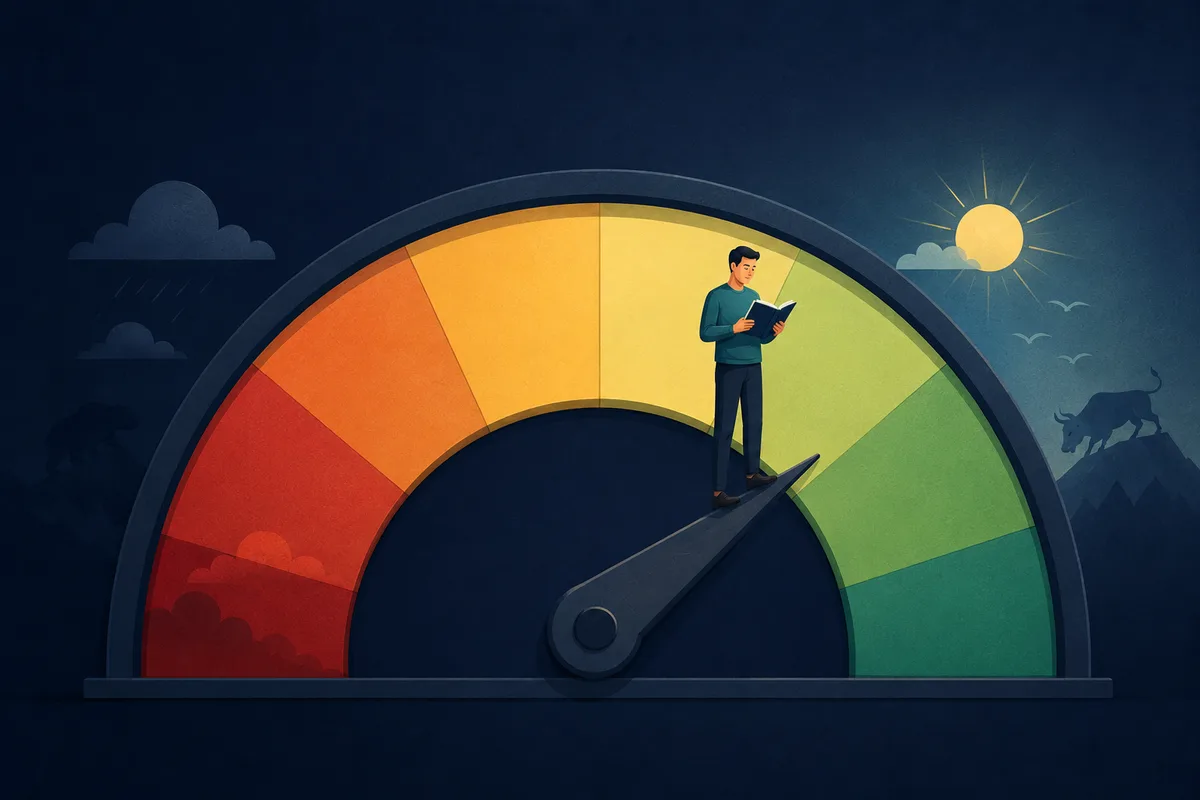
Every day our Fear & Greed Index compresses the crypto market's emotional state into a number from 0 to 100. It's one of the most-checked numbers in crypto, and one of the most misused — treated either as a buy signal from the heavens or dismissed as astrology. It's neither. Here's what the number actually is, and the disciplined way to use it.
What's inside the number
The index blends several measurable ingredients: volatility (unusual fear shows up as unusual swings), momentum and volume (greed shows up as heavy buying into rises), social media activity, Bitcoin dominance (money hiding in BTC often signals altcoin fear), and periodic surveys. Note what's not inside: anything about the future. Every ingredient describes what market participants are doing and feeling now. The index is a thermometer, not a forecast — it tells you the temperature, not tomorrow's weather.
The contrarian logic, and its catch
The famous use is Warren Buffett's line — fearful when others are greedy, greedy when others are fearful. The logic is real: extreme greed means most buyers who were going to buy already have, and extreme fear means most panic-sellers have already sold. Historically, extremes have often marked areas where the crowd was overcommitted. The catch is the word often. Extreme fear can get more extreme; markets have sat in greed for months while prices kept climbing. A contrarian signal that's early is indistinguishable from one that's wrong, for as long as your patience or your money lasts — whichever runs out first.
What the disciplined version looks like
Used well, sentiment answers one question: "is my urge to act right now my analysis, or the crowd's mood leaking into me?" The urge to buy is strongest at exactly the moments greed reads high, and the urge to sell everything peaks in deep fear — the index is a mirror held up to your own impulses. That's why it pairs naturally with mechanical strategies: a dollar-cost averaging plan executes regardless of mood, which is precisely its advantage — our year-long backtest showed the discipline mattering more than the timing. Checking sentiment before a decision is sensible; outsourcing the decision to it is not.
Reading it alongside everything else
No single dial describes a market. The daily market wrap puts sentiment next to breadth — how many coins actually rose — while dominance and the altseason index show where the money is rotating. When the dials disagree — greed on the sentiment dial while breadth is thin, say — the disagreement is usually the most informative thing on the page. When they all agree, remember that unanimous dashboards have preceded reversals too.
General information only, not financial advice. Sentiment indicators describe crowds; they do not predict prices, and acting on them can lose you money.
Written by CryptoList Research · facts drawn from our verified database · corrections policy