
What happens to your crypto when you die? For most people: it vanishes
CryptoList Research · Published 10 Sept 2026
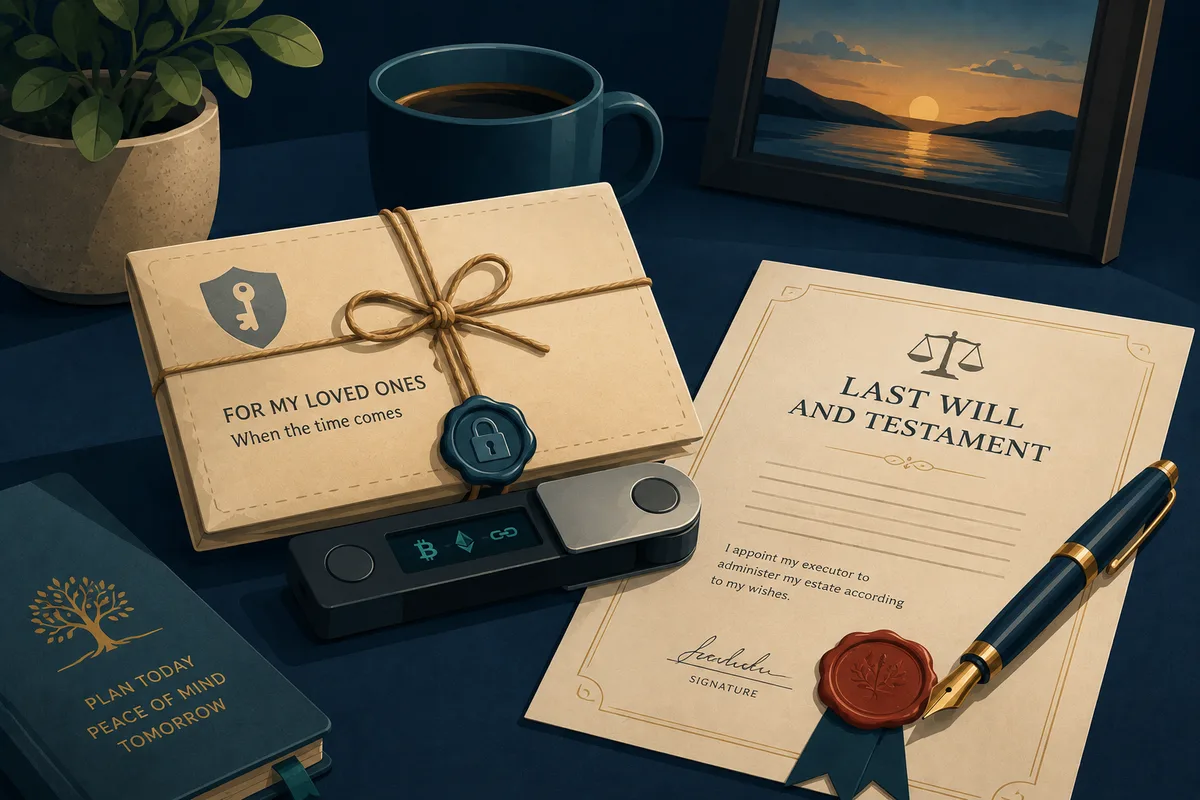
Crypto's defining feature — that no one can access it without the keys — has an uncomfortable corollary: when the only person holding the keys dies, so does access. There is no forgotten-password flow on a blockchain, no institution to petition, no court order a hardware wallet obeys. Whatever the true global figure for coins lost this way, the mechanism is not in dispute. The good news: fixing it takes an afternoon, and done properly it doesn't weaken your security while you're alive.
Exchange accounts: solvable, but slow
Coins on an Australian exchange are the easier case. Exchanges have deceased-estate processes, broadly similar to a bank's: the executor provides a death certificate, probate documents and identity proof, and the platform releases the assets to the estate. It works — if your executor knows the account exists. An account nobody knows about is functionally lost, which is why the single highest-value step in this whole article is a list. Note for later: transferring coins out of the estate can itself have CGT consequences; executors should get advice before moving anything.
Self-custody: the hard case
A hardware or software wallet answers to the seed phrase and nothing else. If your heirs don't have it, the coins are gone; if the wrong person has it, the coins are gone sooner. So the problem is precise: the seed phrase must survive you without being accessible to anyone before then. The clean solutions are physical — a sealed instruction letter with your will (never in the will itself), a bank safe-deposit box the executor can access, or splitting phrase and location between two trusted parties so neither alone can act. What doesn't work: phrases in email drafts, cloud notes, or photos, which trade one failure mode for a worse one.
The will itself
Two rules from estate practice. First, never put keys or seed phrases in a will — wills become public documents through probate. The will says what you own and who gets it; a separate, secured document says how to access it. Second, tell your solicitor crypto exists when drafting, and consider whether your executor is technically capable — a knowledgeable friend can be named alongside a family member. Australia has no special crypto probate regime: it's estate property like anything else, which means ordinary rules, and ordinary rules reward paperwork done early.
The one-afternoon checklist
Write an asset inventory: every exchange account and wallet, without keys — just what exists and roughly where. Write an access letter: seed phrases, PINs and instructions, sealed, stored securely, location known to your executor. Mention digital assets in your will, pointing to (not containing) the access letter. Then put a reminder in your calendar to re-check yearly — wallets change, exchanges change, and a two-year-old access letter pointing at an empty wallet helps nobody. If you hold serious value, a solicitor who has handled digital assets is a modest cost against the alternative, which is permanent.
General information only — not legal or financial advice. Estate law varies by state; a solicitor experienced with digital assets is the right next step for meaningful holdings.
Written by CryptoList Research · facts drawn from our verified database · corrections policy